

106. Construct Binary Tree from Inorder and Postorder Traversal
Description
Given two integer arrays inorder and postorder where inorder is the inorder traversal of a binary tree and postorder is the postorder traversal of the same tree, construct and return the binary tree.
Example 1:
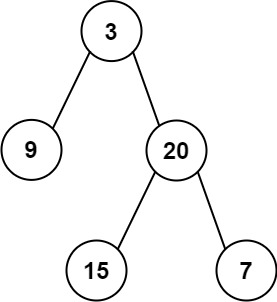
- Input: inorder = [9,3,15,20,7], postorder = [9,15,7,20,3]
- Output: [3,9,20,null,null,15,7]
Example 2:
- Input: inorder = [-1], postorder = [-1]
- Output: [-1]
Constraints:
- 1 <= inorder.length <= 3000
- postorder.length == inorder.length
- -3000 <= inorder[i], postorder[i] <= 3000
inorderandpostorderconsist of unique values.- Each value of
postorderalso appears ininorder. inorderis guaranteed to be the inorder traversal of the tree.postorderis guaranteed to be the postorder traversal of the tree.
Submitted Code
# Definition for a binary tree node.
# class TreeNode:
#     def __init__(self, val=0, left=None, right=None):
#         self.val = val
#         self.left = left
#         self.right = right

class Solution:
    def buildTree(self, inorder: List[int], postorder: List[int]) -> Optional[TreeNode]:
        inorder_idx = {val: i for i, val in enumerate(inorder)}
        self.idx = len(inorder) - 1

        def build(start, end):
            if start > end:
                return None

            root_val = postorder[self.idx]
            self.idx -= 1

            root = TreeNode(root_val)
            mid = inorder_idx[root_val]

            root.right = build(mid + 1, end)
            root.left = build(start, mid - 1)
            return root

        return build(0, len(inorder) - 1)
Runtime: 2 ms | Beats 77.06%
Memory: 21.01 MB | Beats 74.48%
105. Construct Binary Tree from Preorder and Inorder Traversal에서는 전위 순회이기 때문에 preorder[0]이 최상단 루트였다. 하지만 이번에는 왼쪽 → 오른쪽 → 루트으로 가는 후위 순회로, postorder[-1]이 최상단 루트가 된다. 또 뒤집어서 읽기 때문에 재귀 순서도 루트 → 오른쪽 → 왼쪽으로 변경해야 한다.
Other Solutions
1st
class Solution(object):
    def buildTree(self, inorder, postorder):
        """
        :type inorder: List[int]
        :type postorder: List[int]
        :rtype: TreeNode
        """
        # Base case
        if not inorder:
            return None

        # The last element of postorder list is the root
        root_val = postorder.pop()
        root = TreeNode(root_val)

        # Find the position of the root in the inorder list
        inorder_index = inorder.index(root_val)

        # Recursively build the left and right subtrees
        root.right = self.buildTree(inorder[inorder_index+1:], postorder)
        root.left = self.buildTree(inorder[:inorder_index], postorder)

        return root
time complexity: 𝑂(𝑛2)
space complexity: 𝑂(𝑛2)
루트 값을 결정하는 인덱스가 postorder의 맨 뒤에서부터 시작되기 때문에 pop()으로 간단히 할 수 있지만, inorder.index(root.val) 부분에서 시간을 낭비하기 때문에 해시 테이블로 값: 인덱스 정보를 저장하는 쪽이 훨씬 효율적이다.

Leave a comment